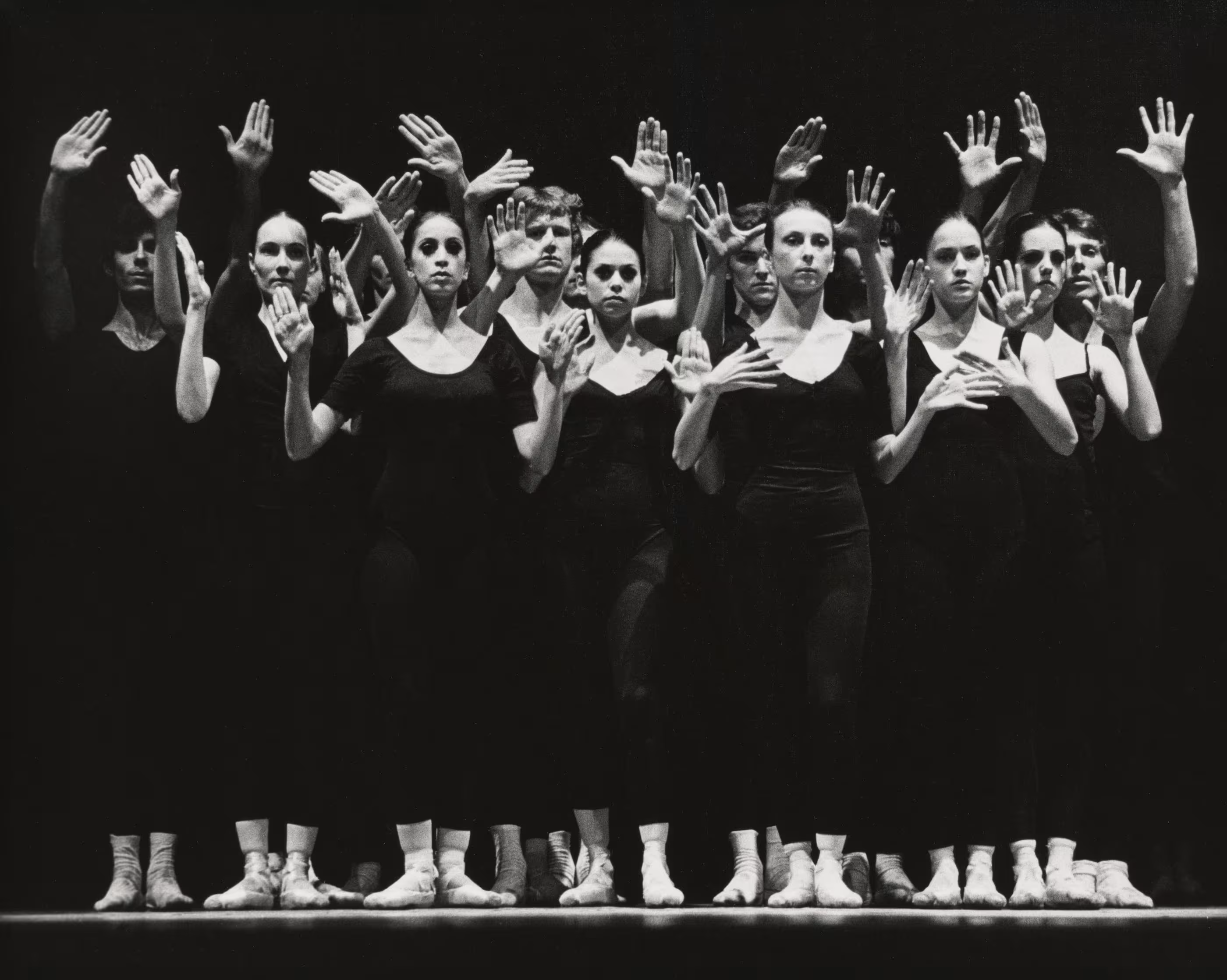
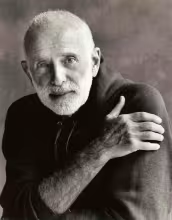

PhotoRequiem Canticles (NYCB, 1972) © Martha Swope. Courtesy of the Billy Rose Theatre Division, New York Public Library for the Performing Arts
Stravinsky's final major work — austere, serene, and profoundly spiritual — is given a solemn and beautifully restrained choreographic realization. Created at the end of the Stravinsky–Robbins partnership, this requiem carries the weight of an ending while pointing toward transcendence.
Choreography: Jerome Robbins
Music: Igor Stravinsky
Lighting Design: Ronald Bates
19 dancers:
Principals: 2 women, 2 men
Corps: 7 women, 8 men
Special Cast Requirements
1 soprano and 1 bass vocalist
“Jerome Robbins’s Requiem Canticles seemed to be an attempt to formalize grief. It was cool, but at once unemotional and agonized. It seemed a distillation from many choreographic sources….From its moments of mechanized frenzy, to the softer, graver dancing of the soloists, to the flickering hands, clenching and unclenching in agonized unison, right to the final silent shouts of grief that seemed like the tears on a stone monument, Mr. Robbins depicted an anatomy of loss and an anguish controlled with an objective artist’s eye.”
“Robbins’ choreography was deliberately a faithful following of music, beat and phrase….Rather than give the dance movement an independent life of its own, Robbins chose to integrate it closely with the music; it became a kind of apostrophe to the composer’s genius.”
“Like a linear abstractionist, he carefully manipulates compact groups with an eye and an ear to the music. Bodies, limbs and fingers shift position, wiggle, open and close to express mood.”
“Robbins’s Requiem Canticles is a masterpiece, the finest work he has ever done….Robbins has composed a ritual, sculpting every formal gesture, punctuating them with flurries of movement, like shards of stained-glass glued together.”
“Employing repetitions of stark, severe movement motifs, the ballet distilled extremes of emotion into a few telling gestures.”
“The nine sections are brief, but densely packed, and Robbins’s ballet vividly reinforces that density of expression.”