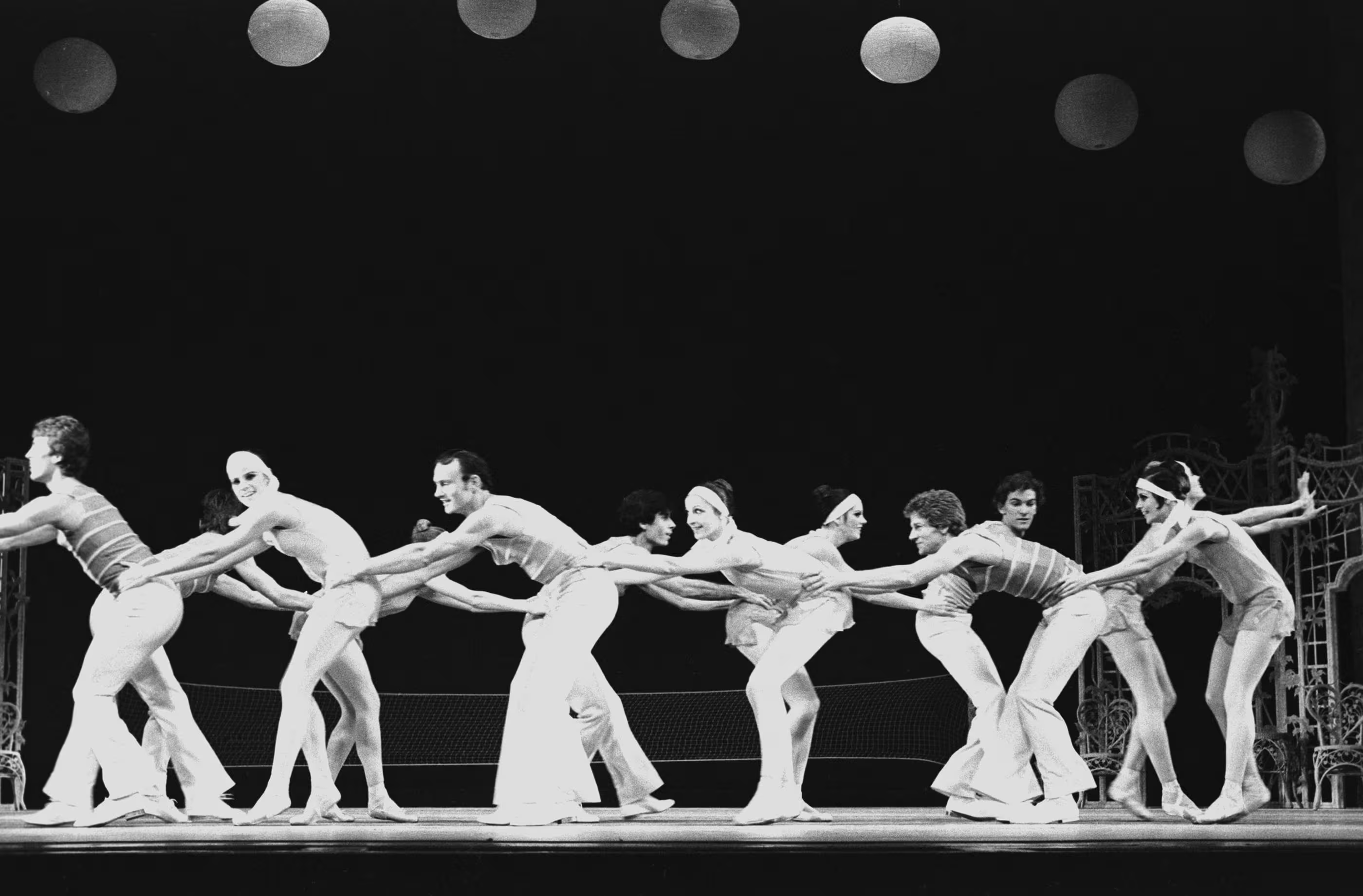


PhotoDumbarton Oaks (NYCB, 1972) © Martha Swope. Courtesy of the Billy Rose Theatre Division, New York Public Library for the Performing Arts
A bright and technically rigorous work inspired by the Bach Brandenburg Concertos, matching Stravinsky's neoclassical concerto with clean, athletic choreography. The ballet evokes weekend country leisure — tennis whites, garden parties — through crisp, joyful ensemble dancing.
Choreography: Jerome Robbins
Music: Igor Stravinsky
Costume Design: Patricia Zipprodt
Lighting Design: Ronald Bates
14 dancers:
7 women
7 men
“A total charmer, full of the subtlest reverberations, matching happily with the music and taking the structure of the score and finding the comedy that lurks dangerously–as so often with Stravinsky–beneath the surface….It is all twenties tea-and-tennis campery but done with such sensibility and such profound understanding of what this music–a neoclassical concert for a chamber orchestra–is all about.”
“Robbins’s setting of the Dumbarton Oaks concerto surprised everyone–horrified some–with its irreverent treatment of the music. The curtain went up on an elegantly trellised garden tennis court....Allegra Kent and Anthony Blum circled the stage in a light, busy-footed couple dance full of silly, suddenly-we’re-in-love charm, which ended with a sportsmanlike handshake and a retrieval of tennis rackets….The dancers in Dumbarton Oaks looked especially stylish, well-rehearsed, and – considering the idea of the piece – remarkably free from overt camp or aggressive performing.”
“As the curtain is rising on Robbins’s Dumbarton Oaks, a summer garden with tennis court, rattan chairs, lanterns suspended overhead, I react ‘Ashton’ to the specificity of detail, and a few minutes later the corps comes on in 1920s tennis clothes and does a chorus line to a musical fugue. Dumbarton Oaks is a spoof of all potboiler ballets, so cleverly staged and attractively danced that you hardly notice it’s a potboiler itself.”
“Robbins depicts flappers cavorting at a 1920s garden party and plasters references to Les Biches, tap dancing, chorus lines, and the Swan Lake cygnets upon the music, without establishing unequivocally just what it is he means to satirize.”
“Against a background of tennis-net, wicker garden furniture and trellis-work, boys in white flannels meet girls in short skirts and bandeaux; instead of merely flirting they band together to send up a variety of subjects, from Radio City Rockettes to Fokine’s Little Swans….The conception sounds camp and it is, but it has a superior sense of style to redeem it, and I for one found it immoderately entertaining.”
“Dumbarton Oaks is a joyous, jazzy ballet filled with delicious Jerryisms–line dancing, high kicks, a tennis match (ending in love), gestural jokes….Dumbarton Oaks should certainly become a permanent addition to the NYCB repertory.”